Impeccably, Nigeria, which is officially addressed as the ‘Federal Republic of Nigeria’, is a federal constitutionalrepublic comprising thirty-six (36) states and its Federal Capital Territory, Abuja with six geo – political zone.
The country is located in West Africa and shares land borders with the Republic of Benin in the West, Chad and Cameroon in the East, and Niger in the North. Its coast in the South lies on the Gulf of Guinea in the Atlantic Ocean.
Nigeria is often referred to as the ‘Giant of Africa’ due to its large population and economy, With approximately 180million inhabitants, it is the most populous and popular country in Africa and the seventh most populous nation in the world. It is comprised of over five hundred (500) ethnic groups, of which the three largest are the Hausa, igbo and Yoruba.
In respect to religion, Nigeria is majorly divided into two with Christians who live mostly in the Southern and Central parts of the country, and Muslims concentrated mainly in the Northern and Southwestern regions. A minority of the populace practice some indigenous or peculiar religions such as paganism.
Since independence in 1960, the country’s oil reserves have played a major role inher growing wealth and influence. Presently, Nigeria is considered by the World Bank as an Emerging Market, and has been identified as a regional power in Africa.
She is also a member of the MINT group of countries, which are widely seen as one of the world’s upcoming ‘BRICKlike’ economies. More so, she is listed among the next eleven economies set to be among the largest in the world.
Nigeria is a member of various global organisations including the Commonwealth of Nations, the African Union, the Organization of the Petroleum Exporting Countries (OPEC), and the United Nations (UN), among other international groups. It is also interesting to note that she is a member of the United Nations’ Security Council. Just like other developing nations.
However, considering the aforementioned compliments and and blessings, Nigeria is currently faced with numerous social, economic, religious and politicalchallenges thereby constituting series of societalcrises.
Some of these challenges include TRIBALISM,corruption, nepotism, high level of immorality,thuggery, election rigging, rampant establishment of fake churches, kidnapping, massacre, amongst others. Aside these, conflicts and mutual distrust between groups has produced multiple pythons, crocodiles and dragons with wild roving eyes like the outlawed IPOB, the Avengers, OPC Boys, AREWA Youths, MASSOB, and farmer-herdsmen bloodbath.
Undoubtedly, the most detrimental of the aforementioned problems in Nigeria is tribalism because their roots are gingered by tribalism, nepotism sycophancy among others .
Tribalism is the state of being organized in or an advocate for a tribe or tribes. In terms of conformity , tribalism may also refer in popular cultural terms to a way of thinking or behaving in which people are loyal to their own tribe or social group. For instance, thinking that the president is from the North, therefore, other parts have been marginalized. This has in no small measure being the problem of Nigeria since 1960.
For Nigeria’s nomenclature to receive it’s normalcy and achieve outstanding development and growth among committee of nations, You and I should no longer see or identify ourselves solely as a member of a tribe, but as a citizen of a nation of one people working toward a common purpose.
As a matter of fact, which African country’s economy will survive the consequences of a broken Nigeria? None, as far as I can see.
I rest my little and narrow case as I say Happy Independence Day to all Nigerians.
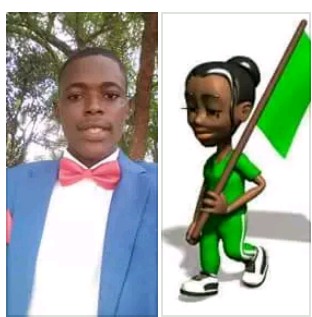
Fidelis David O. is a Journalist, Feature Writer and a Public Relations Practitioner based in Ondo State, Nigeria.
 HOME OF THE INSIDERS
Leave a comment